Puerto Maldonado & Manu National Park with Wayna Trekkers
 AuthorJunior Vilca H.
Wayna Trekkers offers tours to all parts of Peru and South America. Peru is a country filled with ancient history and ruins. But for those who want to experience all the best of Peru you should consider the Peruvian Amazon. For the nature lovers the Peruvian Amazon is a must. The jungle is packed with thousands of varieties of birds, animals, insects and fish.
The Peruvian jungle covers two thirds of the country but interestingly is only home to 5% of the population of the Andean country. The region has many wonderful jungle lodges with experienced guide to make the most of your jungle experience. In this article we explore 2 areas of the jungle close to the Cusco region, Puerto Maldonado & Manu National Park.
Let’s explore these popular destinations in the Peruvian Amazon:
Puerto Maldonado
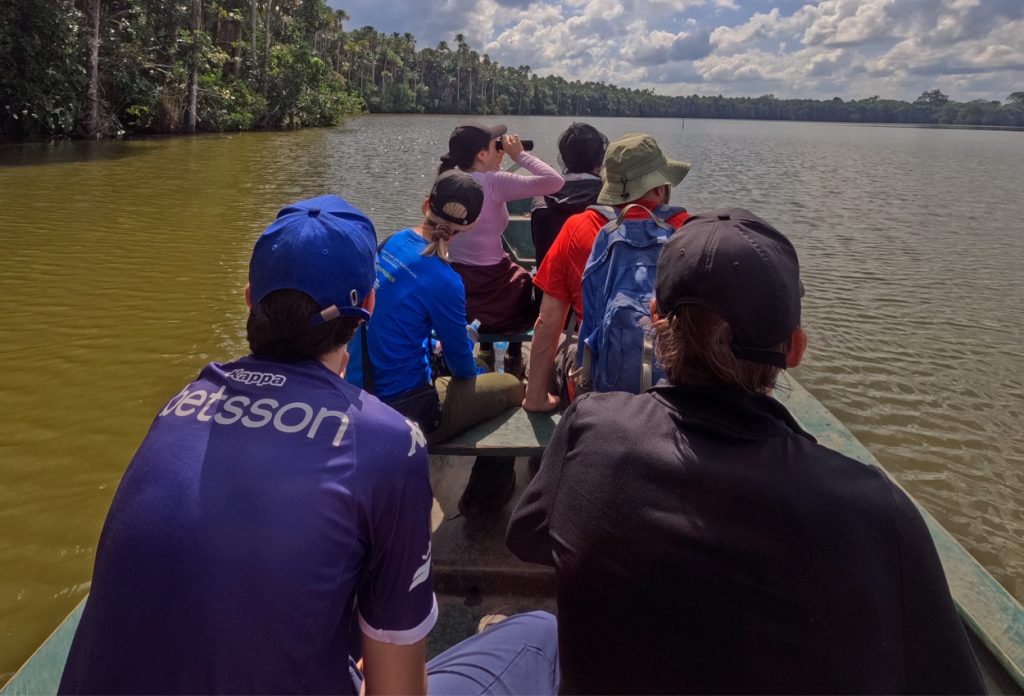
Puerto Maldonado is a jungle city with a difference. If you are traveling from Cusco the first thing you will notice is the change in temperature as the jungle is hot and humid. To get to one of the many jungle lodges you will have to travel on the river by boat. The rivers provide access to the abundant jungle and all it has of offer.
If you want to have the full jungle experience plan to spend around 3 days at one of the many jungle lodges. All have wonderful excursions into the jungle visiting canopy towers and lagoons abundant with wildlife. After dark the jungle turns into another world with the jungle coming alive.
Best Time to Visit
Puerto Maldonado is broken up into a dry season (May-October) and a wet season (November-April). However, being that it is a tropical rainforest, even the dry season tends to have some rain.
Pros of the dry season are that trails are less muddy and there is a higher probability of seeing parrots and macaws at the clay licks. Cons of the dry season are hotter temperatures. Pros of the wet season are that temporal wetlands make it easier to see reptiles and amphibians and there is a cooler temperature. Cons of the wet season are muddy conditions.
Highlights
Jungle Immersion
Puerto Maldonado is the main hub for exploring the southern Peruvian Amazon where the Madre de Dios River intersects with the Tambopata. Wayna Trekkers works with many wonderful jungle lodges to give the perfect immersion into the jungle with tours and experienced guided to give you all the information you need for the perfect experience.
National Park
Tambopata National Reserve encompasses 275,000 hectares (680,000 acres) of protected Amazon rainforest in the southeastern part of Peru. A sanctuary of incredible biological diversity, the reserve features stunning Oxbow lakes and different forest habitats. More than 670 bird and 1,200 butterfly species join a long list of animals that call the area home.
Diversity
Two-thirds of the world’s plant and animal species make their home in the rainforest and new species are always being discovered. The Amazon is the largest rainforest on earth and biodiversity is most fascinating to the adventurous traveler!
How to Get to Puerto Maldonado
By Air: Flying is definitely the most convenient and time-saving transport option. LATAM, offer services to Puerto Maldonado. Flights are daily. A nonstop flight to Puerto Maldonado from Lima is 1 hour 30 minutes. Puerto Maldonado is a direct 55-minute flight from Cusco.
By Road: The Transoceanic Highway now connects Cusco to Puerto Maldonado on a mostly comfortable, winding, paved road. The trip takes around 10 hours. Taking the bus from Cusco to Puerto Maldonado is a good option for travelers with a more flexible travel itinerary.
By Boat: The waterways connect Puerto Maldonado to jungle lodges and remote indigenous communities.
Manu National Park
Overview
Manu National Park encompasses an amazing variety of climates and a bewildering number of plant and animal species. Today researchers continue to discover flora and fauna even after decades of research. Manu is accessible from Cusco and from Puerto Maldonado. The area has a handful of lodges that provide a chance to experience the habitats from cloud forest to lowland rainforest in a setting unlike any other in Peru.
Climate & Weather
Manu’s extreme topography creates multiple microclimates. Lower elevation areas are hotter with average temperatures ranging from 35 C during the day to 25 C at night. In Manu’s higher elevation areas, temperatures are generally cooler. Expect warm temperatures during the day and cool nights. Temperatures can drop after heavy rains, reaching as low as 10 C (50 F).
Highlights
Wildlife
There are more than 2,000 to 5,000 species of plants, including 250 species of trees. The area features more than 1,000 vertebrate species including 200 species of mammals and 850 species of birds, 68 species of reptiles, 77 species of amphibians. Until today there are 1,300 recorded species of butterflies and 13 species of primates. rare species: giant otter, giant armadillo, jaguars, puma, Andean Mountain cat.
History
In some areas of the Manu National Park, you can experience some pre-Inca and Inca ruins and petroglyphs that indicate long history of indigenous settlement. Today, small communities of the Matsigenga Amazonian tribal group, largely along the Manú River or one of its main tributaries
Boca Manu
Located at the meeting point of the Madre de Dios and the Manu River, the village of Boca Manu has a small airport that receives charter airplanes. It’s also a stop on the route over land and by boat from Puerto Maldonado.
Wildlife Spotting
Monkeys, bugs, and reptiles abound in the rainforest. You might also see, if you are lucky the otorongo (jaguar), black panther, tapir, collared peccary, deer, and capybara. Forest trails and cochas (secluded lagoons) are the best place to spot wildlife while learning from your guide about life in the rainforest, medicinal plants and food.
Bird Watching
Many travelers come to Manu specifically for the birds. And with one of the largest bird lists in the world. Airborne residents include the harpy eagle, jabiru, roseate spoonbill, and the cock of the rock.
Clay Licks
Something not to miss is the Clay Licks, this special attraction in Manu is where travelers can see macaws, parrots, and parakeets that flock by the thousands for morning meals of clay.
Canopy Towers
See the rainforest from the perspective of creatures who live at canopy level. Scattered tree towers in Manu range from 30-40 meters (100-130 feet) tall.
How to Get to Manu National Park
From Cusco: by car to Paucartambo, through the Kosnipata Valley to the Manu River
From Puerto Maldonado: by car to Santa Rosa Village 2.5 hours, cross Inambari River to Puerto Carlos, to Boca Colorado 45 minutes, up Madre de Dios River.
To Boca Manu: charter flights land at small airstrip, river transport to lodge.
The Peruvian Amazon is a must see while visiting Peru, contact on of our friendly travel consultants for more information on Puerto Maldonado and Manu National Park.

Junior Vilca H.
Travel specialist sharing practical advice, local stories and inspiration to help you discover Peru.