experiences.
During one journey, travelers can explore beaches, modern coastal cities, desert oases, Andean villages, ancient archaeological sites, high mountain landscapes, and the Amazon rainforest. However, because Peru is varied, distances between regions can be considerable, so it’s not possible to explore the entire country properly in a single trip.
For first-time travelers, the best approach is to choose between two and four regions to enjoy them at a comfortable pace. Trying to visit too many destinations will mean spending more time in airports, buses, and transfers than actually enjoying Peru.
This article answers the main questions asked by travelers from Europe, the United States, and Canada. It covers entry requirements, transportation, altitude, safety, money, Machu Picchu, food, packing lists, and the must-see places in your first journey to Peru.
Is Peru a Good Destination for First-Time Travelers?
Of course, Peru is an excellent destination for travelers interested in history, nature, food, culture, wildlife, archaeology, beaches, and outdoor experiences.
The country has well-established tourism routes connecting Lima, Cusco, the Sacred Valley, Machu Picchu, Arequipa, Lake Titicaca, Ica, Paracas, the Amazon rainforest, and northern Peru.
Hotels, domestic flights, tourist buses, trains, private transportation, and guided tours are widely available along the main travel routes.
Peru is especially suitable for travelers interested in the following:
- Ancient civilizations and archaeological sites
- Mix of culture and traditional communities
- Hiking and mountain landscapes
- Peruvian food and culinary experiences
- Pacific beaches and coastal scenery
- Desert adventures and sand dunes
- Amazon wildlife and rainforest experiences
- Photography and nature
- Small-group and private tours
However, Peru is not a destination where every important activity is arranged last minute. Machu Picchu tickets, train services, Inca Trail permits, domestic flights, Amazon lodges, and some popular tours should be reserved in advance.
Important note: Peru is much larger than many first-time visitors expect. A realistic itinerary is usually more enjoyable than trying to visit the coast, the Andes, the Amazon, and northern Peru in one short journey.
Peru Offers Far More Than Just Machu Picchu
Machu Picchu is the most famous attraction in Peru, but it represents only one part of the country’s archaelogical and natural diversity.
Peru is divided into three main geographical areas:
- The Pacific coast
- The Andes
- The Amazon rainforest.
Each area offers a completely different travel experience.
The Peruvian Coast

The coast of Peru includes modern cities, beaches, deserts, archaeological sites, fishing towns, and wildlife reserves.
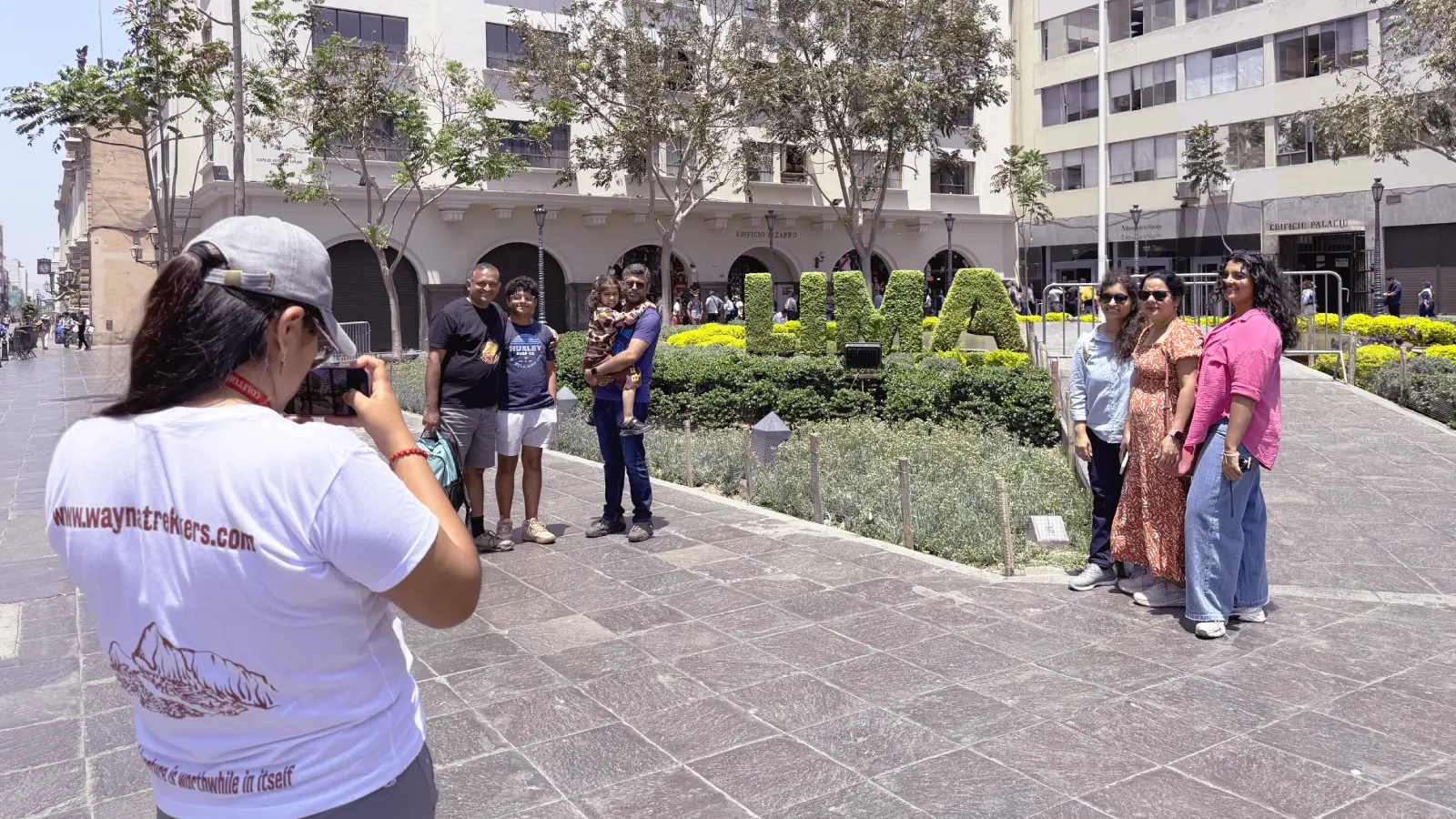
Lima is generally the main arrival point for international travelers. The capital is known for its historic past, museums, coastal neighborhoods, restaurants, and being recognized as a gastronomical capital of South America.
Travelers with extra days can continue south toward Ica, Paracas, and Huacachina.
The Ica region is better known for:
- Huacachina Oasis
- Sandboarding
- Dune buggy experiences
- Vineyards and pisco production
- The Paracas National Reserve
- The Ballestas Islands
- The Nazca Lines
Huacachina is a small oasis surrounded by large desert dunes. It is one of the most popular destinations on Peru’s southern coast and can be combined with Paracas or Ica.
Helpful note: To explore most of this area, it is recommended to spend at least 3 days.
Beaches in Northern Peru
Northern Peru is known for warmer weather and some of the most popular beaches.
Destinations such as Máncora, Punta Sal, Vichayito, and Los Órganos are ideal for travelers looking for:
- Warmer coastal weather
- Relaxation
- Swimming
- Surfing
- Beach hotels
- Seafood
- Marine wildlife
The northern beaches are quite far from Cusco and Machu Picchu, so they should be included only when the itinerary has enough days and if the coastal region is on your plans
Northern Peru and Kuélap
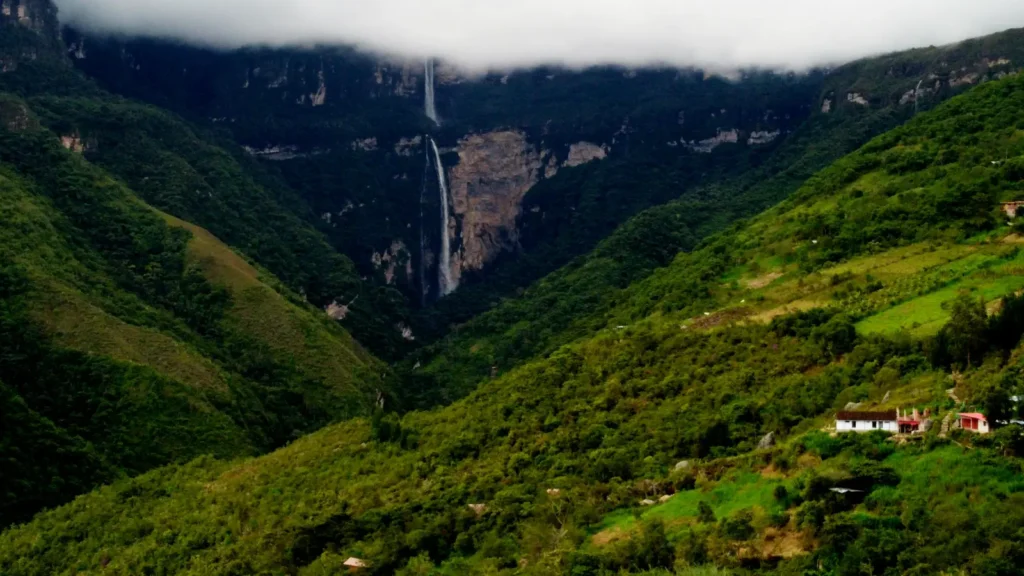
Travelers interested in archaeology, nature, and less crowded destinations should consider northern Peru.
Kuélap is an impressive archaeological complex built by the Chachapoya culture. It is located in the Amazonas region and is surrounded by cloud forest and mountain landscapes.
A journey through the area can also include:
- Chachapoyas
- Gocta Waterfall
- Sarcophagi of Carajía
- Revash mausoleums
- Leymebamba Museum
- Traditional villages
- Cloud forest scenery
Kuelap is a great option for travelers who want to discover a different side of Peru beyond the classic southern route.
However, visiting Kuelap requires additional travel time. It’s not recommended that they be added to a short itinerary that already includes Lima, Cusco, Machu Picchu, and the Amazon.
Helpful note: To discover the most remarkable destinations in Northern Peru, 5 to 10 days are recommended.
The Andes of Peru
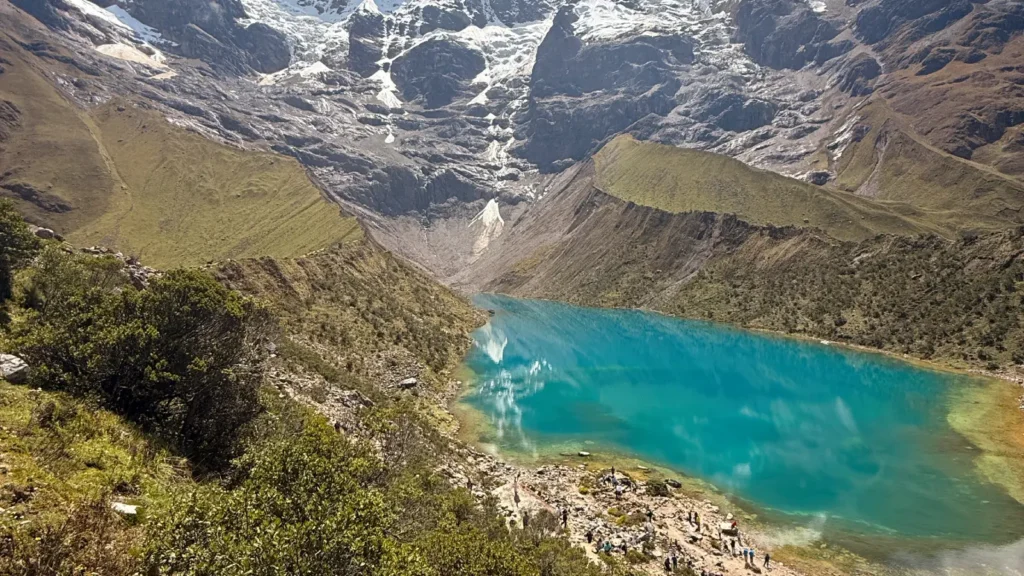
The Andes are home to many of Peru’s most iconic destinations, including Cusco, the Sacred Valley, Machu Picchu, Arequipa, Colca Canyon, and Lake Titicaca.
This region is ideal for:
- Archaeological tours
- Cultural experiences
- Mountain trekking
- Mountain Biking
- Horseback riding
- Local markets
- Traditional communities
- Andean food
- Photography
- Historical tours
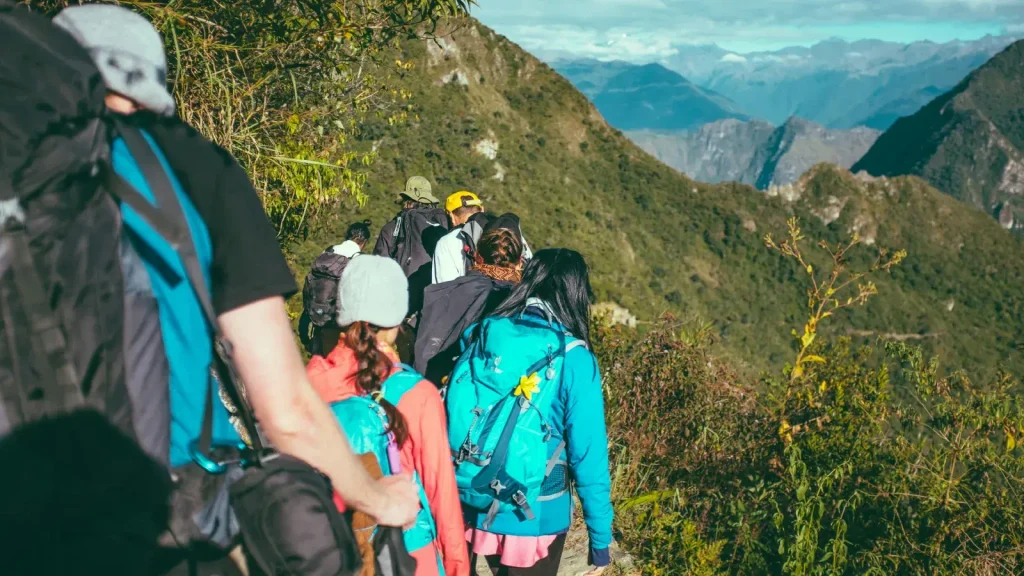
Many destinations in the Andes are located at high elevation. Travelers should plan enough time to acclimatize prior to any experience, especially before starting a trek or a demanding excursion.
Helpful note: To discover the most remarkable destinations in the Andes of Peru, 7 to 10 days are recommended.
The Peruvian Amazon and Manu National Park
The Peruvian Amazon covers a large part of the country and offers excellent opportunities to spot wildlife and learn about one of the richest rainforest ecosystems.
Manu National Park is the most important protected natural area in Peru. It extends from the eastern slopes of the Andes into the Amazon basin and includes an extraordinary variety of ecosystems.
Depending on the route, season, and length of stay, travelers may see:
- Monkeys
- Macaws
- Toucans
- Caimans
- Otorongo
- Giant river otters
- Butterflies
- Tropical plants
- A wide variety of bird species
Trips to Manu National Park generally require several days because of the difficult access, which includes overland and river transportation.
Travelers should visit Manu with an experienced local tour operator that understands the area, accommodation, weather, transportation, wildlife, and conservation regulations.
Important: Manu National Park is not a simple day trip from Cusco. Most programs require more than 3 days, and longer itineraries normally provide better opportunities to experience what this pristine corner of the world has to offer.
Helpful note: To see and to experience the magic of Manu National Park, you need to spend at least 4 to 8 days.
Can You Explore All of Peru in One Trip?
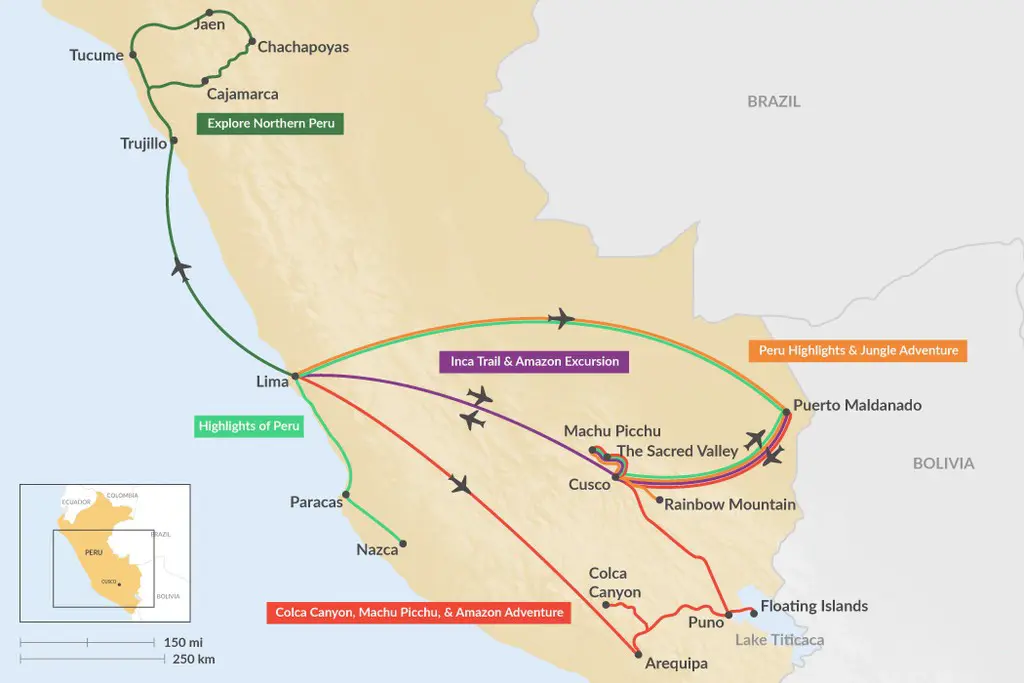
No. Peru is a large and diverse country, and it is not possible to explore it in a single trip, especially when travelers have limited weeks to visit.
A complete journey could include cities on the coast, beaches, deserts, archaeological sites, Andean mountains, traditional communities, the Amazon rainforest, and northern Peru. However, combining all of these areas would require many domestic flights, long road journeys, and constant hotel changes.
For a first visit, it is better to choose a limited number of regions.
For example:
- Lima, Cusco, the Sacred Valley, and Machu Picchu
- Lima, Ica, Paracas, Cusco, and Machu Picchu
- Cusco, Machu Picchu, and Manu National Park
- Lima, northern beaches, and Kuélap
- Lima, Arequipa, Colca Canyon, Puno, Cusco, and Machu Picchu
A slower itinerary allows travelers to enjoy each destination, adjust to altitude, experience local food, and avoid unnecessary stress.
Planning note: Peru is a country to visit more than once. A first trip can focus on the classic southern route, while a future journey can include northern Peru, the Amazon, the coast, or other lesser-known archaeological destinations.
Quick fact: If you plan to see the most iconic places of Peru in one journey, we recommend 15 to 20 days. Contact our travel experts to help you build your itinerary.
What Are the Entry Requirements for Peru?
Entry requirements depend on nationality, passport, and planned length of stay.
Many travelers from the United States, Canada, the United Kingdom, and European countries can enter Peru for tourism without applying for a visa in advance.
However, immigration requirements may change. Travelers should always confirm the current state of the requirements that apply to their nationality before traveling.
A passport should generally have at least six months of validity beyond the date you enter Peru.
Immigration authorities may also ask for:
- Proof of onward or return travel
- Hotel or accommodation details
- A basic travel itinerary
- Evidence of sufficient funds
- Contact information in Peru
Documents to Check Before Traveling
| Document | Recommendation |
|---|---|
| Passport | Confirm that it has enough remaining validity |
| Visa | Check the requirements for your nationality |
| Return ticket | Keep a digital and printed copy |
| Hotel reservations | Save the address of your first accommodation |
| Travel insurance | Highly recommended |
| Tour confirmations | Keep offline copies |
| Emergency contacts | Save your embassy and tour operator details |
Do not keep all important documents only in your email. Internet access may be limited in remote areas, so download essential information to see when offline.
How Many Days Do You Need in Peru?
For a first trip, 10 to 14 days is usually a comfortable amount of time if the main focus is Lima, Cusco, the Sacred Valley, and Machu Picchu.
Travelers who want to include Ica, the Amazon, northern beaches, Kuélap, Arequipa, or Lake Titicaca should consider a longer journey.
Suggested Trip Lengths
| Time Available | Recommended Itinerary |
|---|---|
| 7 days | Lima, Cusco, Sacred Valley, and Machu Picchu |
| 10 days | Classic route plus Ica, Paracas, or another nearby experience |
| 14 days | Classic route plus Arequipa, Lake Titicaca, or a short Amazon program |
| 18–21 days | Lima, Cusco, Machu Picchu, and one additional region |
| More than 21 days | A longer journey including northern Peru, Manu, beaches, or several regions |
Example 10-Day Peru Itinerary
Day 1: Arrival in Lima
Day 2: Explore Lima
Day 3: Fly to Cusco and rest
Day 4: Easy cultural visit in Cusco
Day 5: Explore the Sacred Valley
Day 6: Visit another Sacred Valley destination and Travel to Aguas Calientes
Day 7: Visit Machu Picchu and return
Day 8: Free day in Cusco
Day 9: Rainbow Mountain
Day 10: Departure
Travelers planning a multi-day trek should add at least two or three days for acclimatization before the hike.
Which Additional Destination Should You Choose?
| Travel Interest | Recommended Destination |
|---|---|
| Archaeology and fewer crowds | Kuélap and Chachapoyas |
| Desert landscapes and adventure | Huacachina and Ica |
| Beaches and warm weather | Máncora, Punta Sal, or Vichayito |
| Wildlife and rainforest | Manu National Park or Puerto Maldonado |
| Food and coastal culture | Lima |
| Mountain scenery and history | Cusco and the Sacred Valley |
| Colonial architecture and canyon landscapes | Arequipa and Colca Canyon |
| Highland culture and lake scenery | Lake Titicaca |
The right choice depends on the season, available time, travel style, and total budget.

When Is the Best Time to Visit Peru?
Peru can be visited throughout the year, but the best time depends on the regions included in the itinerary.
The Andes generally have two main seasons:
- Dry season: Approximately May to September
- Rainy season: Approximately November to March
- Transition months: April and October….
The dry season usually provides good weather for trekking and clear mountain views. However, it is also the pick of tourism.
June, July, and August often attract more travelers from all over the world, so Machu Picchu tickets, trains, hotels, and treks should be booked well in advance.
The rainy season brings greener landscapes and fewer visitors, although rainfall may affect hikes, roads, flights, and outdoor activities.
Peru Travel Seasons
| Period | General Conditions | Recommended For |
|---|---|---|
| May to September | Drier days and colder nights in the Andes | Trekking, photography, and classic itineraries |
| October to November | Transition from dry to wet and moderate visitor numbers | Flexible travel plans |
| December to March | Wet season in the Andes | Green landscapes and cultural travel |
| April | Transition toward the dry season | Balance of scenery and fewer crowds |
The coast, Andes, and Amazon have different weather patterns. Check the weather conditions in the different regions of Peru; do not take it for granted that the weather is the same throughout Peru.
Understanding Altitude in Cusco
Altitude is one of the most important matters for first-time visitors.
Cusco is located at 3,400 meters (11,150 ft), above sea level. Travelers who arrive directly from Lima, Europe, the United States, or Canada may notice the altitude during their first few hours.
Common symptoms usually include:
- Mild headache
- Shortness of breath
- Fatigue
- Difficulty sleeping
- Reduced appetite
- Light dizziness
Every traveler reacts differently. Being physically fit does not guarantee that a person will avoid symptoms.
How to Adjust to the Altitude
We recommend, during the first 24 to 48 hours:
- Walk slowly
- Keep your body hydrated
- Avoid intense exercise
- Eat light meals
- Limit alcohol
- Rest properly
- Avoid scheduling a difficult hike during your first days
Some travelers prefer to spend their first nights in the Sacred Valley.
Urubamba and Ollantaytambo are located at lower elevations than Cusco and may provide a more comfortable acclimatization process to the Andes.
Important: Severe headache, confusion, difficulty breathing while resting, or symptoms that continue to worsen require medical attention.
Travelers with existing health conditions should speak with a qualified medical professional before going to high-altitude destinations….
How Far in Advance Should You Book a Machu Picchu Trip?
Machu Picchu should be one of the first portions of your itinerary to confirm.
Entrance is booked with specific circuits and routes. The ticket determines which viewpoints, paths, and archaeological areas can be visited. There are limited tickets per day, so you may plan your Peru trip around your Machu Picchu date.
Tickets must be booked well in advance during:
- June, July, and August
- Christmas and New Year
- Easter week
- Popular trekking months
- National holidays
- Family and group travel
- Trips with fixed international flights
Recommended Booking Order
- Decide your potential travel dates.
- Check Machu Picchu availability.
- Select the most suitable circuit.
- Reserve your train tickets.
- Book accommodation in Machu Picchu Pueblo or Ollantaytambo.
- Arrange transportation and guiding services.
- Purchase domestic flights after confirming the main itinerary.
Planning note: Do not purchase complicated non-refundable services around Machu Picchu until you have the entrance, train schedule, and transfer arrangements. Remember that once tickets are sold out, they are not released again.
Which Machu Picchu Circuit Is Best?
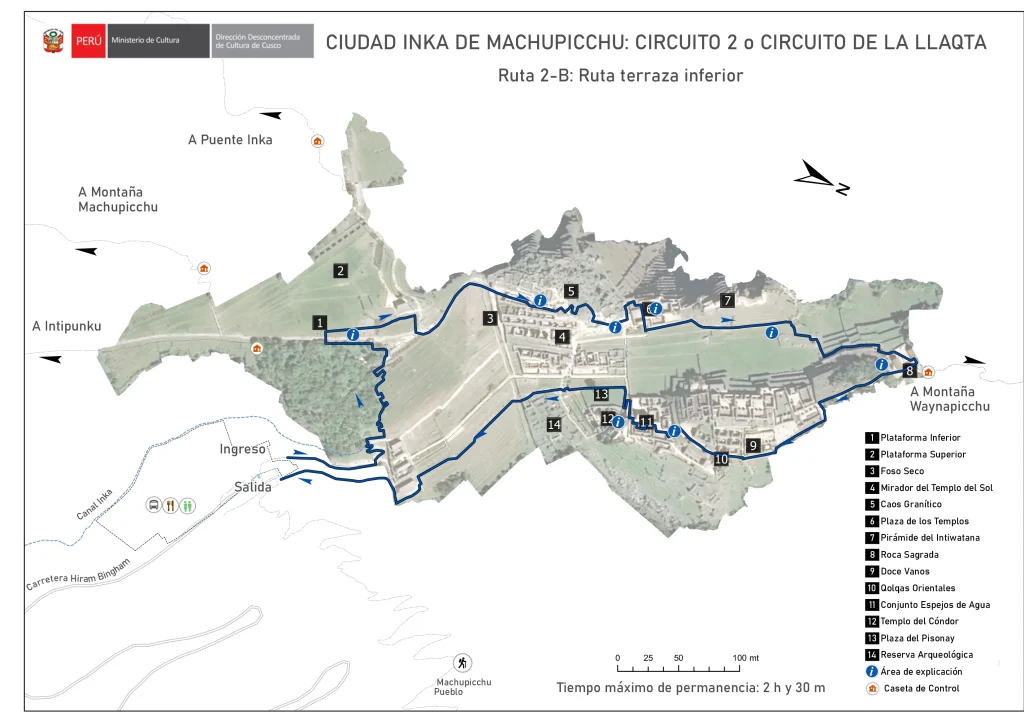
There is no single circuit that is perfect for every traveler.
The best option depends on whether the priority is
- The classic panoramic photograph
- A closer visit to the archaeological area
- A mountain hike
- A shorter and less demanding walk
- Arrival through the Inca Trail
In general:
- Some routes focus on upper panoramic viewpoints.
- Other routes pass through more of the archaeological area.
- Mountain routes require more time and physical effort.
- Inca Trail visitors follow routes connected to their trekking entrance.
Before booking, check:
- Which viewpoints are included
- The walking difficulty
- The number of stairs
- The estimated duration
- Seasonal availability
- Whether the route includes the areas you most want to see
A reliable local tour operator can explain the differences before purchasing the entrance ticket.
Learn more about circuits here.
Should You Visit Only Cusco and Machu Picchu?

Machu Picchu may be the main reason for a trip to Peru, but it should not be the only experience.
The Sacred Valley is especially valuable because it helps visitors understand Andean geography, agriculture, culture, and Inca history.
Consider including:
- Pisac
- Ollantaytambo
- Chinchero – Learn about traditional Andean textiles and discover handmade products from local artisans
- Moray
- The Maras salt ponds
- Traditional weaving demonstrations
- Community visits
- Local markets
- A traditional Pachamanca
Cusco also deserves at least one full day out of your arrival day.
Its historic center, markets, museums, archaeological sites, neighborhoods, and restaurants help place Machu Picchu within a broader cultural experience.
Travelers with additional time can include another part of Peru, but they should avoid adding too many distant regions to one itinerary.
Places you can add are Puno, Arequipa, or Tambopata.
Getting Around Peru
Peru is a rich and geographically varied country. Distances can be larger than they appear on a map.
Domestic Flights
Flights are the most practical way for long-distance routes such as:
- Lima to Cusco
- Lima to Arequipa
- Lima to Puerto Maldonado
- Lima to Iquitos
- Lima to northern Peru
Important! Remember to have enough time between domestic and international flights. Weather conditions, operational changes, and delays may affect your travel plans.
Trains to Machu Picchu

Tourist trains connect the Cusco region and the Sacred Valley with Machu Picchu Pueblo.
Ollantaytambo is one of the most common train departure points, although services may also operate from other stations, depending on the season. During the rainy season trains only run from/to Ollantaytambo.
Arrive early for check-in and make sure of the luggage allowance. Many visitors travel with a small overnight bag and leave larger luggage at their hotel in Cusco, the Sacred Valley, or with their tour operators.
Tourist Buses and Private Transportation
Tourist buses are common between major destinations.
Private transportation is more expensive but offers greater flexibility, especially for:
- Families
- Senior travelers
- Small private groups
- Travelers with extra luggage
- Visitors who want to make several stops
Taxis and Ride Applications
In larger cities, use transportation arranged by your hotel, an authorized airport service, or a recognized ride application such as Uber.
Avoid accepting random transportation offers, especially when the price and destination have not been confirmed; some may demand more at the end of the ride.
Money, Cards, and Cash in Peru
The official currency is the Peruvian sol “PEN”, written as S/.
Credit and debit cards are widely accepted in established hotels, restaurants, agencies, and shops in tourist areas.
However, cash remains useful for:
- Local markets
- Small restaurants
- Tips
- Local transportation
- Rural communities
- Small entrance fees
- Public toilets
- Snacks and water
Some tourism businesses may accept US dollars at lower rates, but daily purchases are generally easier in Peruvian soles.
Euros and Canadian dollars are not normally accepted for everyday transactions.
Practical Money Tips
- Carry small bills and coins.
- Use ATMs inside banks, hotels, or shopping centers.
- Avoid displaying large amounts of cash.
- Inform your bank before traveling.
- Check international withdrawal fees.
- Carry a second card separately.
- Avoid accepting damaged bills.
- Confirm the total before paying by card.
When a card terminal asks which currency to use, paying in Peruvian soles is usually more practical.
Is Peru Safe for First-Time Travelers?
Peru receives many international visitors, and the main tourism destinations are accustomed to travelers.
However, basic precautions are necessary in busy cities, markets, transport terminals, nightlife areas, and crowded public spaces.
Basic Safety Precautions
- Keep phones secure near busy roads.
- Do not leave bags hanging behind chairs.
- Use hotel safes for passports and cards.
- Carry only the cash needed for the day.
- Arrange airport transfers in advance.
- Avoid poorly lit streets late at night.
- Confirm guides and drivers through a reliable operator.
- Do not accept unsolicited help at ATMs.
- Keep digital copies of important documents.
- Avoid displaying expensive jewelry or electronics.
During demonstrations, strikes, or roadblocks, transportation and access to attractions can be occasionally affected.
Visitors with limited time for traveling should maintain some flexibility and stay in contact with a local tour operator.
Safety tip: Most travel problems can be avoided through verified transportation, booking services in advance, awareness, and planning realistically….
Health, Vaccinations, and Travel Insurance
Every traveler should consult a doctor or travel clinic before visiting Peru, especially if you plan on combining high-altitude destinations with the Amazon rainforest.
Recommendations may differ depending on whether the itinerary includes only Lima, Cusco, and Machu Picchu or also lower-elevation rainforest areas.
It’s recommended to arrive at high altitudes 2 days before your excursions at high altitudes; with that being said, if your trip starts everywhere else before heading to Cusco and you have one day for a city tour and one for Sacred Valley tour, it should be enough for acclimatization.
Should I get travel insurance?
Travel insurance is highly recommended for all travelers going to Peru. It will protect you from unexpected situations that can put your trip at risk and result in significant expenses.
Travel insurance should ideally cover:
- Medical treatment
- Emergency evacuation
- Trip interruption or cancellations
- Flight delays or cancellations
- Lost luggage
- Trekking at the planned elevation
- Adventure activities included in the itinerary
Some insurance plans exclude high-altitude trekking or require additional coverage, so the policy should be reviewed carefully.
Tip: Safety wing could be a good option, as they have affordable travel insurance options with no long-term contracts ideal for travelers and digital nomads
Food and Drinking Water
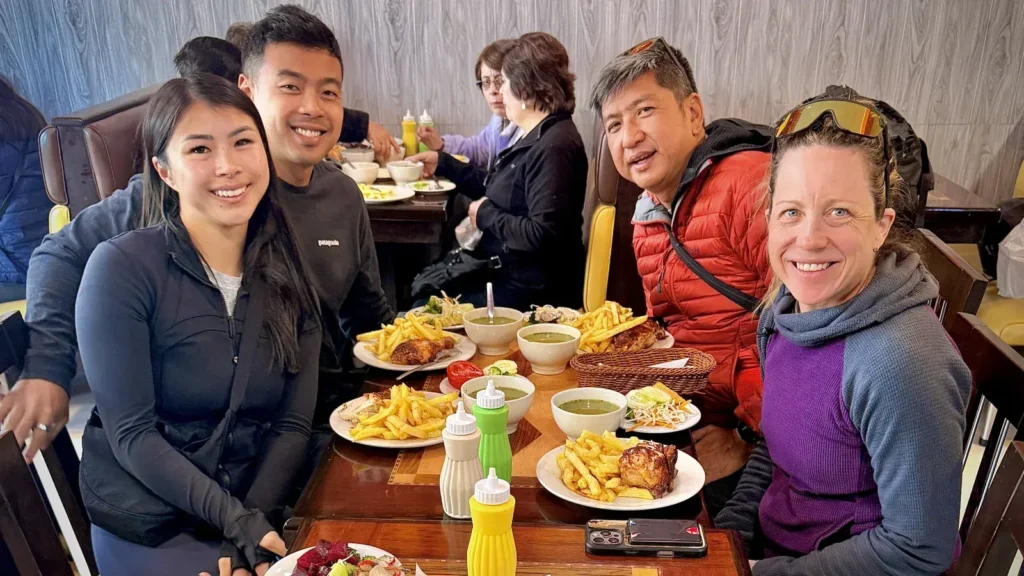
Peruvian cuisine is one of the most important highlights in Peru, and Peru is home to renowned fine restaurants in the world.
A trip to Peru cannot be completed if you have not experienced its extraordinary flavors.
Popular dishes include:
- Ceviche
- Lomo saltado
- Ají de gallina
- Causa
- Anticuchos
- Quinoa soup
- Pachamanca
- Regional potato dishes
For good digestion:
- Drink bottled, boiled, or properly filtered water.
- Check that bottled water is sealed.
- Avoid ice when the water source is uncertain.
- Choose busy and well-reviewed restaurants.
- Wash or peel fruit.
- Carry hand sanitizer.
- Try unfamiliar food gradually.
- Avoid very heavy meals before any activity at high altitudes.
Street food can be enjoyable, but travelers should choose vendors with visible hygiene and good food turnover. Ask your tour operator where the safest street meal spots are located.
What Should You Pack for Peru?
Packing depends on the itinerary and the regions you visit, but layers are essential.
Temperatures can vary considerably between sunny afternoons, cold Andean nights, coastal deserts, beaches, and humid rainforest areas.
Essential Peru Packing List
- Valid passport
- Travel insurance information
- Lightweight waterproof jacket
- Thermal clothing: jackets, pants, hats, and gloves that are waterproof
- Clothes made with materials like linen or cotton, which will allow air to circulate better than synthetic fabrics.
- Comfortable walking shoes
- Waterproof jacket or poncho for the rainy season
- Wide-brimmed hats
- Sunglasses
- Snacks like chocolate bars, cereal bars or any dry fruit
- High-SPF sunscreen
- Reusable water storage: 2-3 liters
- Small daypack
- Personal medication
- Basic first-aid supplies
- Power bank
- Binoculars: For wildlife viewing
- Flashlight or headlamp: For nighttime activities in the jungle
- Universal travel adapter
- Printed or offline reservations
- Insect repellent for the Amazon.
Electricity and Power Adapters
Understand the electrical system of the country to keep your devices charged and avoid damaging any of your electronics. Peru’s standard voltage is 220 V.
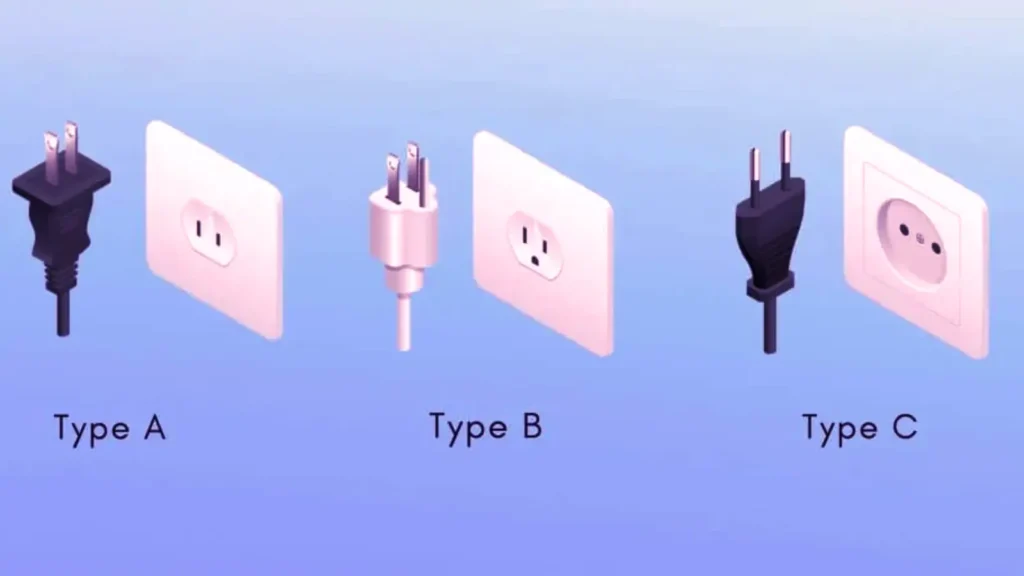
Most modern phones, cameras, and laptops’ chargers support a wide range of different voltages. However, the voltage information printed on the charger should always be checked. Most hotels and other accommodations use combined outlets that accept both Type A and Type C plugs, and newer buildings may have Type B.
What Type of Plugs are Used in Peru?
Power Outlets: Type A and Type C are the most common.
- Type A: Two flat parallel pins (common in the USA, Canada, Japan)
- Type C: Two round pins (common throughout Europe and much of South America)
- Type B: Three-pin grounded version of Type A (less common in Peru)
Do I Need an Adapter?
It will depend on where you are coming from.
| Country | Is an Adapter Needed ? |
|---|---|
| United States | Sometimes. Bring an adapter that supports Type A & Type C |
| Canada | Sometimes |
| United Kingdom | Yes |
| Australia and New Zealand | Yes |
| European Union | Usually not for Type C plugs |
| Japan | Usually not for Type A plugs |
High-powered devices such as hair dryers or straighteners may require dual-voltage compatibility.
SIM Cards, Internet and Communication in Peru
Staying connected during your travel is quite easy in Peru. Most cities and tourist destinations have good internet connections as well as affordable prepaid SIM cards available from different operators.
Note that internet connection may be limited during:
- Multi-day treks
- Train journeys
- Community visits
- Remote mountain travel
- Amazon excursions
Buying a SIM card
Travelers can purchase a local SIM card from different operators; the main mobile network providers are Movistar, Claro, Entel, and Bitel, or use an international eSIM such as Holafly, which has different packages for days or even weeks.
You can buy a SIM card at:
- Lima and Cusco airports
- Official mobile stores
- Shopping malls
For unexpected mobile drops, it’s highly recommended to download offline apps:
- Offline maps
- Airline applications
- Train tickets
- Hotel addresses
- Tour confirmations
- Offline Translator
- Emergency contact information
Emergency Numbers
Save these numbers handy for emergencies during your experience:
- Police: 105
- Tourist Police: +51 1 460-1060
- Fire Department: 116
- Ambulance (SAMU): 106
Travel Tip: Peru is a Spanish-speaking country, although Quechua and other Indigenous languages are also spoken in some regions. English became common in the tourism industry; however, it would be helpful if you could learn some Spanish expressions so you can improve your interactions with the local people.
Tipping in Peru
In Peru, tipping is not mandatory yet greatly appreciated. Amounts will depend on how pleased you are with the service provided.
- In restaurants, check if the service already includes a tipping percentage in the bill.
- Taxis are not tipped generally; however, it is polite. For a ride from the airport to your hotel, you can tip S/10 to S/30 PEN.
- For guides they expect a tip from $5 USD to $15 USD per day
If you are planning to do a multiday hike, guides, drivers, porters, cooks, and trekking teams are generally tipped at the end of the service.
Consider:
- The length of the service
- Group size
- Quality of the experience
- Difficulty of the activity
- Most importantly if the tip is shared among the group
Carry small denominations of Peruvian soles, bills, and coins.
First-Time Travelers’ Common Mistakes
Trying to Explore All The Country in One Trip
Peru covers an immense area, and it’s very diverse to experience properly in a short journey.
Choose a few regions and enjoy them at a comfortable pace.
Thinking That the Challenging Activities Should be Done First
Your body needs time to acclimate; keep your first days light or do easy activities.
Booking Machu Picchu Too Late
Book your Machu Picchu trip/ticket first and plan your journey around it. Preferred circuits and schedules may not be available.
Ignoring Travel Times and Distances
A route that appears short on a map may require mountain roads, flights, train journeys, and transfers.
Packing Only for Cold Weather
The Andes can be cold at night, while other areas of Peru can be hot and humid.
Carrying Only Credit Cards
Small businesses, markets, rural communities, and entrances to some tourist attractions may accept cash only.
You Get What You Pay For
Very cheap tours may involve large groups, rushed visits, shopping rather than touring, unclear inclusions, or limited customer service.
Pay attention to:
- Group size
- Guide experience
- Transportation
- Entrance tickets
- Meals
- Emergency procedures
- Hotel standards
- Inclusions
- Cancellation policies
Should I Travel Independently or With a Travel Agency?
Independent travel works well for many visitors in Lima, Cusco, Arequipa, and other established destinations.
However, local organization can be valuable for experiences involving permits, remote communities, train schedules, trekking, mountain transportation, and the Amazon.
A reliable travel agency can help coordinate the following:
- Machu Picchu entrance tickets
- Train reservations
- Airport and hotel transfers
- Professional guides
- Inca Trail permits
- Camping equipment
- Porters and support teams
- Specific diet requirments
- Emergency procedures
- Alternative arrangements during disruptions
If you are a first-time visitor, you can combine independent days with organized tours and trekking experiences.
Why Travel With Wayna Trekkers?
Wayna Trekkers helps international visitors experience Peru through carefully organized journeys, professional local guides, and realistic and flexible itineraries.
Whether you are planning Machu Picchu, the Sacred Valley, the Inca Trail, an alternative trek, Manu National Park, or a longer journey through Peru, our team can help you build an itinerary based on your time frame, physical condition, interests, and travel style.
As we explained in the lines above, Peru cannot be explored completely in one single trip. Instead of creating rushed itineraries, we help travelers focus on the destinations that best match their interests and enjoy each experience at a leisurely pace.
A good journey through Peru should allow enough time to acclimatize, understand the places you visit, interact respectfully with local communities, and enjoy the landscapes along the way.
A reliable company will provide quality transportation, experienced guides, free-hassle planning, and support 24/7, including help during unexpected emergencies or changes.

Frequently Asked Questions For a Peru Visit
Is Peru expensive?
Peru is not an expensive country and can accommodate different budgets.
Local meals and transportation can be affordable, while luxury hotels, private tours, premium trains, domestic flights, and last-minute reservations increase the total price.
Can I use euros in Peru?
Euros are not accepted for daily purchases generally.
You can exchange your Euros at the many exchange offices in the cities you visit. Peruvian soles are more practical for everyday purchases
Do I need to speak Spanish?
No. English is widely spoken in tourism businesses.
However, basic Spanish is useful in markets, taxis, small restaurants, and rural areas. Learn some expressions just in case.
Is Machu Picchu suitable for senior travelers?
Machu Picchu can be suitable for senior travelers depending on mobility, health, pacing, and circuit selection.
The site includes stairs, uneven surfaces, and limited resting areas.
Can I visit Machu Picchu in a wheelchair?
A wheelchair traveler can visit only circuit 3’s platform.
Can I visit Peru without hiking?
Yes. Machu Picchu can be reached by train and bus. Lima, Cusco, the Sacred Valley, Arequipa, Ica, Lake Titicaca, and the Amazon also offer many experiences that do not demand too much exertion.
Is the Inca Trail necessary to visit Machu Picchu?
No. Most travelers reach Machu Picchu by train. The Inca Trail is a separate trekking experience that requires permits and advance planning, but it is a very rewarding experience.
Can I drink tap water in Peru?
No, we advised you to drink bottled, boiled, or properly filtered water.
Is one trip enough to see Peru?
No. One trip can provide an excellent introduction, but Peru has too many regions, climates, archaeological sites, natural areas, and cultural experiences to explore properly in a short journey.
Many travelers plan to discover other areas such as northern Peru, the Amazon, the coast, Kuélap, or the northern beaches after a Machu Picchu visit.
You do not need to include all famous destinations in your first journey to Peru. It is not realistic to explore the entire country in one trip without creating a rushed and exhausting itinerary.
The best approach is to choose from two to four regions, travel at a comfortable pace, and leave enough time for altitude adjustment, local food, cultural encounters, and unexpected discoveries.
With thoughtful planning and reliable travel company support, Peru can be an accessible, enjoyable, and deeply rewarding destination for first-time travelers from around the world.